We sat down with Matthew Hilton to discuss the design approach and process behind his new Campus Outdoor Collection for Case.

How do you approach the balance of comfort, durability and aesthetics when designing for the outdoors?
As with all my work I begin with function, structure and aesthetics. Outdoor furniture must work hard, but it should also have clarity and composure. Comfort is achieved through geometry. Ergonomics, the angle of the back, the natural spring or flex in a frame, much as Hans Coray achieved with the Landi chair by relying on form rather than upholstery. I have admired that chair for decades and finally have an opportunity to add my take on that direction. Durability comes from simplicity of construction and materials that are allowed to be honest. When those fundamentals are right the aesthetics emerge naturally, a clean modernist calm that feels neither temporary nor over styled.
What shifts or stays the same when you translate your design language to an outdoor context?
The underlying language stays the same. Simplicity, precision and a certain directness. I welcome the limitations of the brief and manufacturing to guide and influence the initial design concept. What does change is the technical response to weather and wear. Out in the elements the details must be sharper and more deliberate. We think about water run off, fixings, the behaviour of materials in heat and cold. This discipline is something I have always admired in the work of Hans Coray and in Rodney Kinsman and OMK, a refusal to add anything unnecessary. The outdoor context deepens that discipline.
You've said before that classics have presence and character and that build quality and materials are equally crucial. How does that philosophy take shape in the new Campus Outdoor Collection?
Presence comes from the graphic strength of the forms. Confident lines, controlled proportions and an economy of elements. Character comes from how the pieces sit in space, almost as sculpture yet fully functional, open and slightly architectural. Build quality is expressed through the precision of each component and the solidity of the materials. You can read the structure at a glance. Nothing is disguised or decorated.

Tell us about the materials for this collection and how you make something weatherproof while keeping it tactile and inviting without sacrificing design integrity?
Outdoor materials can easily drift toward the purely technical. I wanted something robust but still human. Metals with inherent grain and tactility, surfaces that feel precise rather than clinical. My aim is to allow materials to express their nature and to shape them so that the user experiences something direct and inviting rather than industrial.
What role does colour play in the Campus Collection and how did you approach tone, contrast, or finishes for outdoor settings?
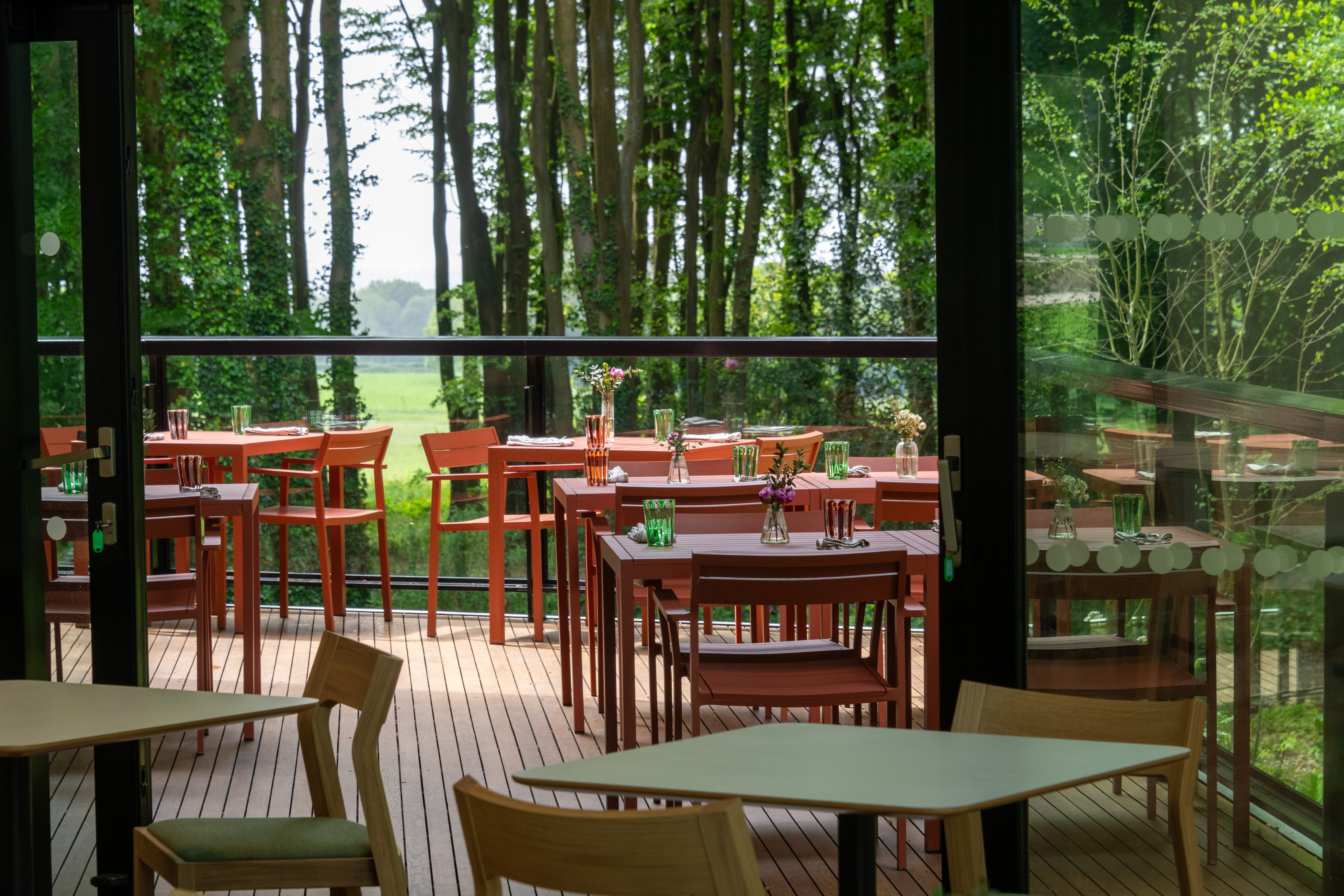
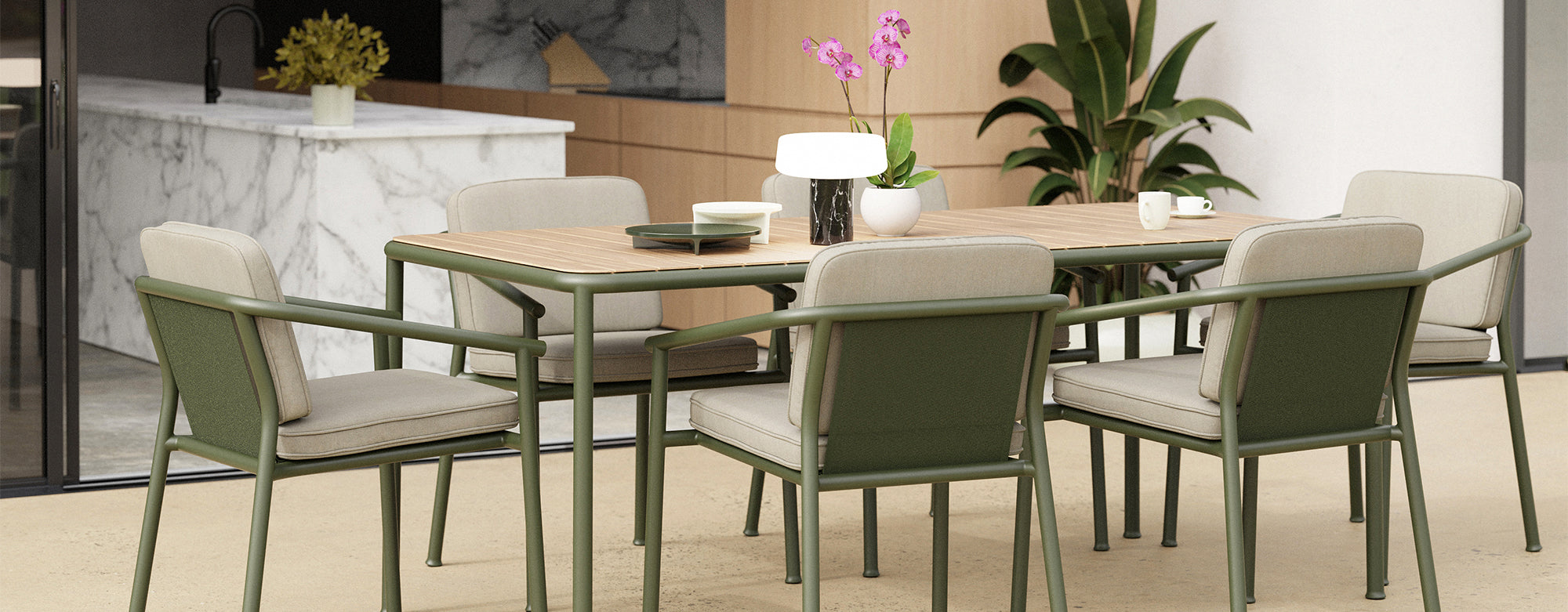
Colour is used with restraint. Outdoors it must sit comfortably with sky, stone, foliage and surrounding architecture. I chose tones that are calm and slightly desaturated, colours that create definition without becoming decorative. Purposeful and structural rather than cosmetic. The finish helps the pieces anchor themselves in a landscape rather than compete with it.

What is one common misconception about outdoor furniture you would like to challenge?
That outdoor furniture must look heavy and overbuilt or light and temporary. The Campus chair shows this is not true. It has a light aesthetic yet it is strong, elegant and has a pleasing weight and feeling of stability. Think also of the engineered clarity of Richard Rogers and Renzo Piano. They proved in architecture that refined structures can be both minimal and robust. Outdoor furniture can be rigorous, beautifully made and refined, not disposable and not ornamental.
Did a particular way of living outdoors or a specific environment inspire the forms or functions of these pieces?
Yes. I was thinking about shared outdoor environments such as gardens, courtyards, terraces and campuses. Places where people move freely and interact with furniture in a relaxed and improvised way. I have always looked for confident forms intended for real life rather than staged environments. That influenced the openness and informality of these pieces.
Are there any subtle or unexpected details we might miss at first glance?
There are several. The controlled radii that soften the geometry without losing the modernist clarity. The way the seat and back planes meet the frame as if they were drawn lines rather than constructed components. The quiet and slightly surprising junctions that give the pieces a sense of lightness. These are small and almost invisible decisions but they add to the final impression.
Campus felt like a natural name for the collection, as it evokes a sense of community and coming together. There’s a vibrancy and social energy to campus life that reflects the spirit of the range, designed for relaxation, connection and slower moments outdoors together.