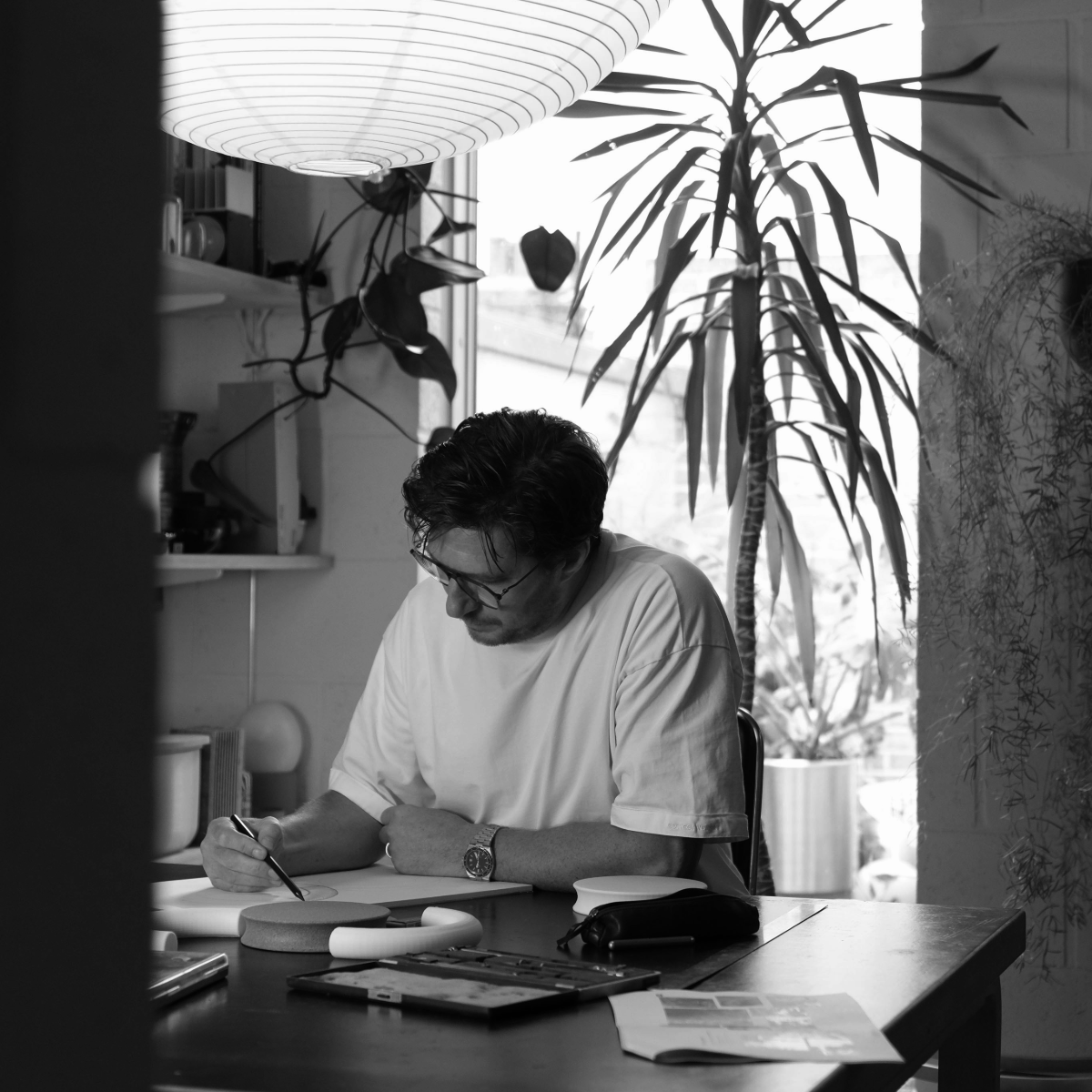
"I’m only interested in making things that have a way about them - a personality" said Matthew Hilton unwaveringly when we met him in his Crystal Palace studio on a sunny morning in September. Hilton showed us around his studio while telling us about his inspiration, compromises in design and his work for Case. What inspired you to become a designer? I always knew I wanted to do something creative. As a kid I used to paint and make clothes and all kinds of stuff. I didn’t do that well in other subjects in school so I think I just concentrated on being creative. I didn’t really know what to do with it until I went to art school where someone one day suggested furniture design. That was when things fell into place. Do you come from a creative family? No, not at all. I was the first one in my family to go to art school. My dad was a doctor, my mum was a midwife and my older brother and older sister were both doctors, so it was kind of a struggle. That struggle has actually been pretty important and it has always been a motivation for me to have a bit of a struggle with it.
So how did it go from there? When I came to Kingston University in London and I just became obsessed. I used to browse through the shops who sold vintage furniture in Kings Road - I really focussed on my Design and Furniture course and starting working for people after. What materials do you favor? I suppose it’s timber because that’s the strongest and longest lasting tradition for furniture. I understand timber well and I like working with it. It’s really interesting at the moment because of CNC development - it’s modernising after being very stuck for a long time. Wood gets better with age and it’s long lasting so there’s some really interesting things about it.
What inspires your designs? I’m influenced by a lot of things from the past, from art now, from architecture and from things I see. But mostly it’s understanding what the product needs to do, the brief and the company and their situation. Tell us a bit about your design process It usually starts with a brief or a conversation with Paul Newman (Director at Case Furniture). A conversation often starts because Paul has found a new manufacturing facility or because he’s seen a gap in Case’s collection. Then we talk about it and we go and think about it in general and explore some ideas. Once we get a design that’s starting to come together we go to the factory to see what’s possible and what’s not.
What role does manufacturing play in the design process? The manufacturing is really important. You can’t design something without knowing exactly where and how it’s going to be made because every factory is slightly different. I need to know what their strengths and weaknesses are as well as the things that cause them difficulties. Case Furniture move their manufacturing around - that’s one of the things Paul is really good at - finding new manufacturers which gives us new possibilities. Having that visit is really important. I’m pretty obsessed with efficiency in manufacturing which influences the way things look. So, how can manufacturing influence the way things look? It’s probably not visible to other people, but being obsessed with efficiency is an approach that helps us make decisions on which way to go. You’ve got to make decisions and becoming obsessed with something is quite good for that. Sometimes you can’t do exactly what you want to do, and you got to find the best answer you can in that situation. You start off with inspiration and an aesthetic thing, but you have to compromise. Design isn't just inspiration and creativity - it is compromise, but compromise that is within framework and structured. It’s not a negative part of the process.
So compromise in design is a good thing? It can be a pain sometimes, but it’s not a negative thing because you end up with a better product. We’ll get to a stage in the design where we can see that something is looking quite good, and when we get into the factory it gets better - it gets polished and refined. Do you have a favourite piece of furniture you like to design? Chairs are good to design but I also like extending tables because they are difficult. I was just thinking that one of my least favorite things to design is a bed, but actually trying to find a new way to make a bed would be really interesting or trying to make a bed for a low price but that looks great would be interesting. So it is not always the type, it’s the whole brief really. It needs to be something quite difficult to do - I think the best things come out of a difficult brief. What is your favourite piece that you have designed for Case Furniture? That’s a difficult question to answer. It’s difficult to answer because there are things I’m proud of having done for various reasons, but I think overall it’s the Cross Table because it’s quite a difficult product to design and get right. It needs to flatpack for transport, it needs to be really solid when it’s put together, it extends and it stores the leaves inside. It’s quite complicated and it’s difficult to get to the stage where it does all that easily. It’s the most complex thing we’re designed for Case Furniture.
What was the idea and inspiration behind the Cross Table? Visually I wanted it to have presence - I wanted people to see it and either love it or hate it. I wanted it to be a strong thing, so that people would have proper feelings about it. When you try to appeal to a lot of people, that often fails - I think you have to make a stand and just do appeal to the people you appeal to. Do you have a favourite designer? I like lots and lots of things from a lot of different people, but I couldn’t name just one. I really admire people who stick to what they do. The people who become recognised they stick to what they do, it’s their nature, it’s just how they work. If you think of all the things that people regard as great design they’re not quiet, ordinary things and yet people are afraid of doing just that. If I think of the Eos range (for Case Furniture) that actually is really quiet and doesn’t make a big statement, or its statement is really minimal and quiet and I suppose that’s why that’s successful. So, it’s a tricky thing to get right and you can’t all the time. And often actually when you think you’ve got it right, it isn't - that’s really annoying, hah.