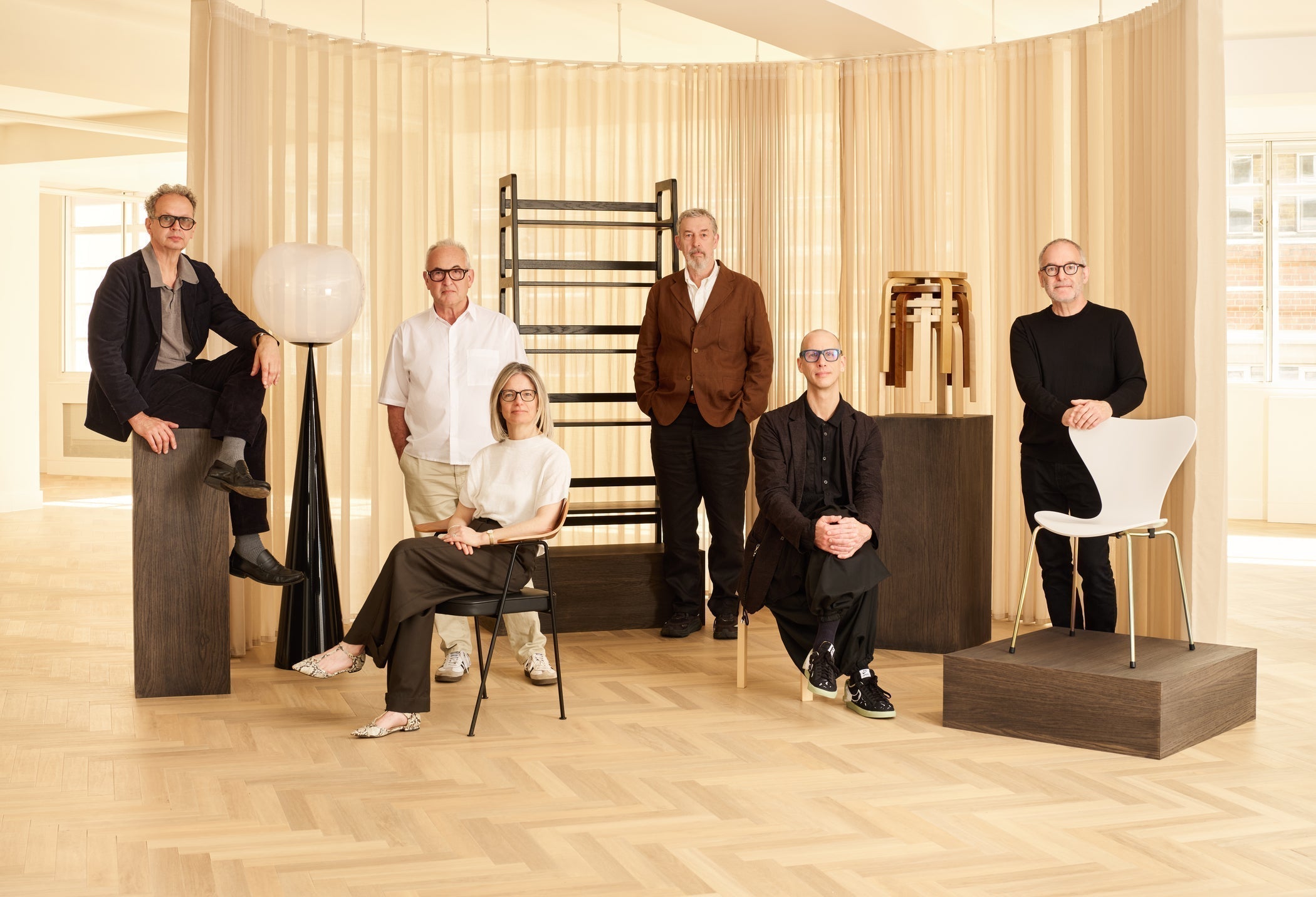
As a founding designer for Case, Nazanin Kamali has certainly earnt her stripes. With exquisite form at the heart of her fabulous creations, which range from desks to chairs and sofas, the Iranian talent has developed a signature look of beautiful simplicity.
A hallmark, she says, that hails from Japan, where her sister lives with her Japanese husband. Intricate, detailed and fluid, Asia has influenced her aesthetic, with quietly sophisticated designs that boast superior precision and sublime craftsmanship. As a graduate of the Royal College of Art, naturally creative Nazanin has channelled her skills into a professional career that has seen her work with esteemed designer Paul Newman and found her own company, amongst other impressive milestones.
Here, we sit down with our founding designer to talk iconic furniture, products for Case and contemporary design, all while discovering what drives her seemingly never-ending inspiration…
What inspired you to become a designer?
I’ve always had an interest in making. My mother was a seamstress and pattern-cutter, and I started sewing from a very early age, as young as four or five. I used to make clothes, shoes and cardboard furniture for my dolls in Tehran, Iran.
I came to the UK in 1978, and because of the Iranian Islamic Revolution, I ended up staying in the UK and continued schooling here. I was encouraged to study maths and science, which I did, but I always maintained my love for fashion and dressmaking.
At 18, I decided to pursue the arts, and at art school, I became involved in 3D design using any material that was available to me, from paper to ceramics and wood. I continued my studies and specialised in blacksmithing at degree level. This was in the late 1980s and early 1990s, where one-off furniture was in-vogue and highly inspirational.
I went on to study MA Furniture at the Royal College of Art, London – at the time a highly-competitive course – where I pursued my passion for making one-off pieces. When I graduated, I completed an adult education basket-weaving course and continued making, while teaching. Together with two fine artists, I put together an art collective group, Non-Specific Creativity. We secured several art and design projects, such as the Time Out Billboard Competition, and we worked on the interior design and concept for a small independent Japanese restaurant in Brighton, Oki-Nami. It’s here where we collaborated with graphic design studio, Graphic Thought Facility, and ceramicist, Julie Goodwin.

In 1995, I started working at Aero, a homeware company owned by Paul Newman, where I was responsible for various aspects ranging from product development, store and exhibition design, and sourcing and buying. Five years later, Paul and I started Interior Newman and Kamali, continuing product development and manufacturing for retailers such as Heal’s and The Conran Shop. Then, Paul started Case with Sheridan Coakley, and I continued running Interior Newman and Kamali, and designing for Case.
In 2015, I launched a textiles range based on embroidery projects I had pursued, alongside my furniture work. In 2020, I reduced my involvement in the design work and started a psychotherapy course, which I’m pursuing presently.
Have you always been interested in, and passionate about, furniture design?
I’m passionate about creativity and I don’t necessarily see conventional design boundaries. I admire designers such as Arne Jacobsen, who have a vision for the entity of a project, such as the SAS Royal Hotel. I guess I’ve attempted that approach – in a small way – with Oki-Nami or Aero, and these are the projects I’m passionate about.
You were born in Iran; does your heritage inspire your creativity?
I hope so! Iran is an integral part of me. I’m not sure how much of that inspiration is translated in my furniture, but I think that Iranian inspiration is very visible in my early work, and my current embroidery. I feel it’s a bit more complicated to incorporate it in the work I do for Case, since it’s rather specific.
There’s distinct Japanese influence in your designs; where does this come from?
In the early 1990s, I went to Japan and stayed with my sister (who is married to a Japanese man), and I was blown away by the intricacies of Japanese design. I once again came across that ‘detailed’ aspect of design that I so much admire in Jacobsen’s work. And of course, the pieces that Case has manufactured date back to Oki-Nami’s second restaurant, designed by me in 2008.
You’re a founding designer Case; can you talk us through the pieces you’ve created so far?
Some pieces for Case had a previous life! For example, the Celine Desk was designed for John Lewis. This was a desk that I wanted to have in my small seaside house. A simple desk I could put my laptop on and wouldn’t look too intrusive in the corner of my dining room, but would be elegant enough in my bedroom to use as a dressing table. The buyers at John Lewis were really into Mad Men, the TV series, so it’s inspired by mid-century design. It was an easy project for me, because I love that era, too!
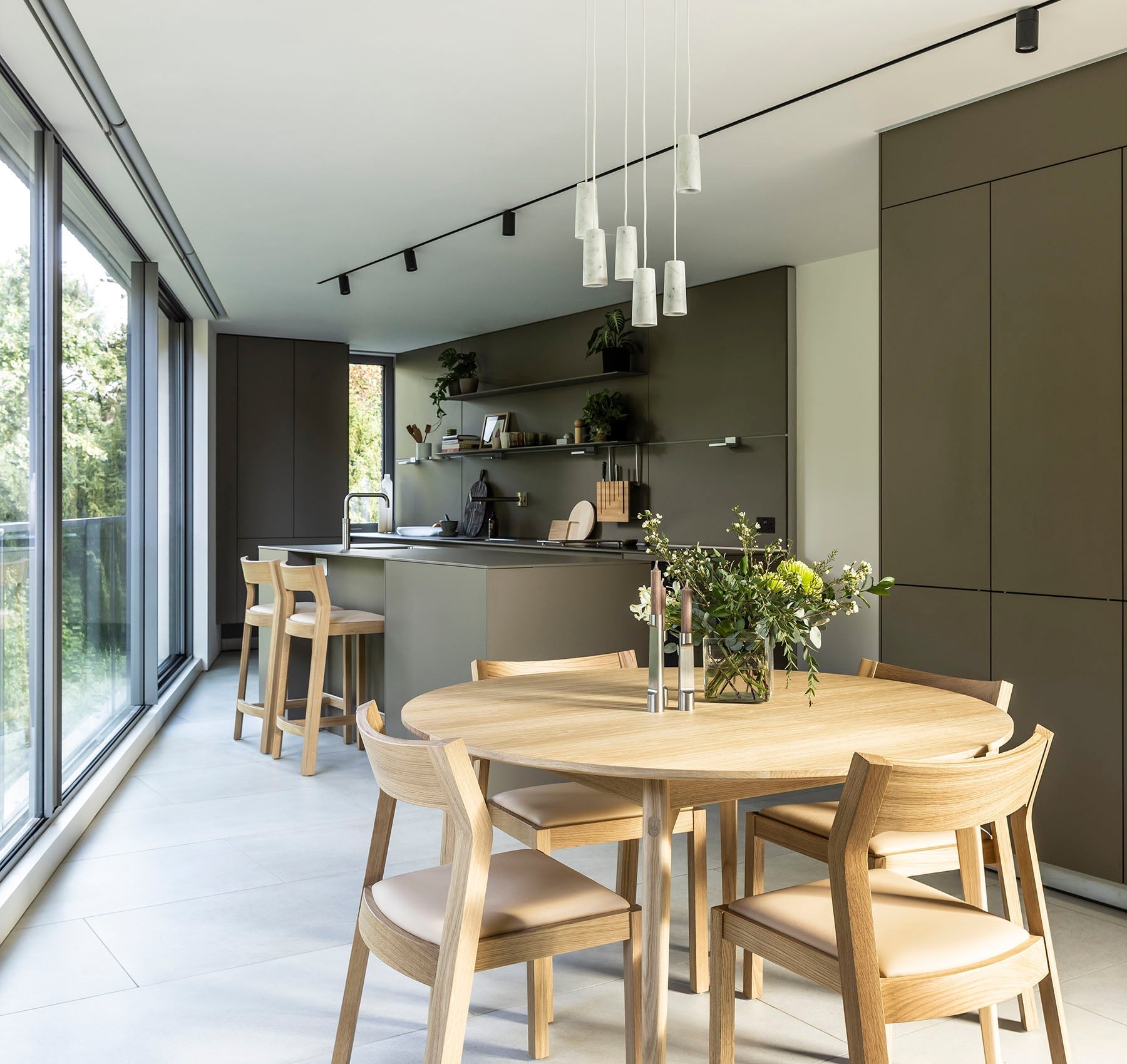
The Oki-Nami range, including a chair and stool, was designed for the second Oki-Nami restaurant in Brighton. I wanted to incorporate the Japanese oak construction reminiscent of Japanese temples and for the range to have a look of longevity that’s integral to traditional Japanese architecture. The seats had to be generous, too, for fussy restaurant customers!
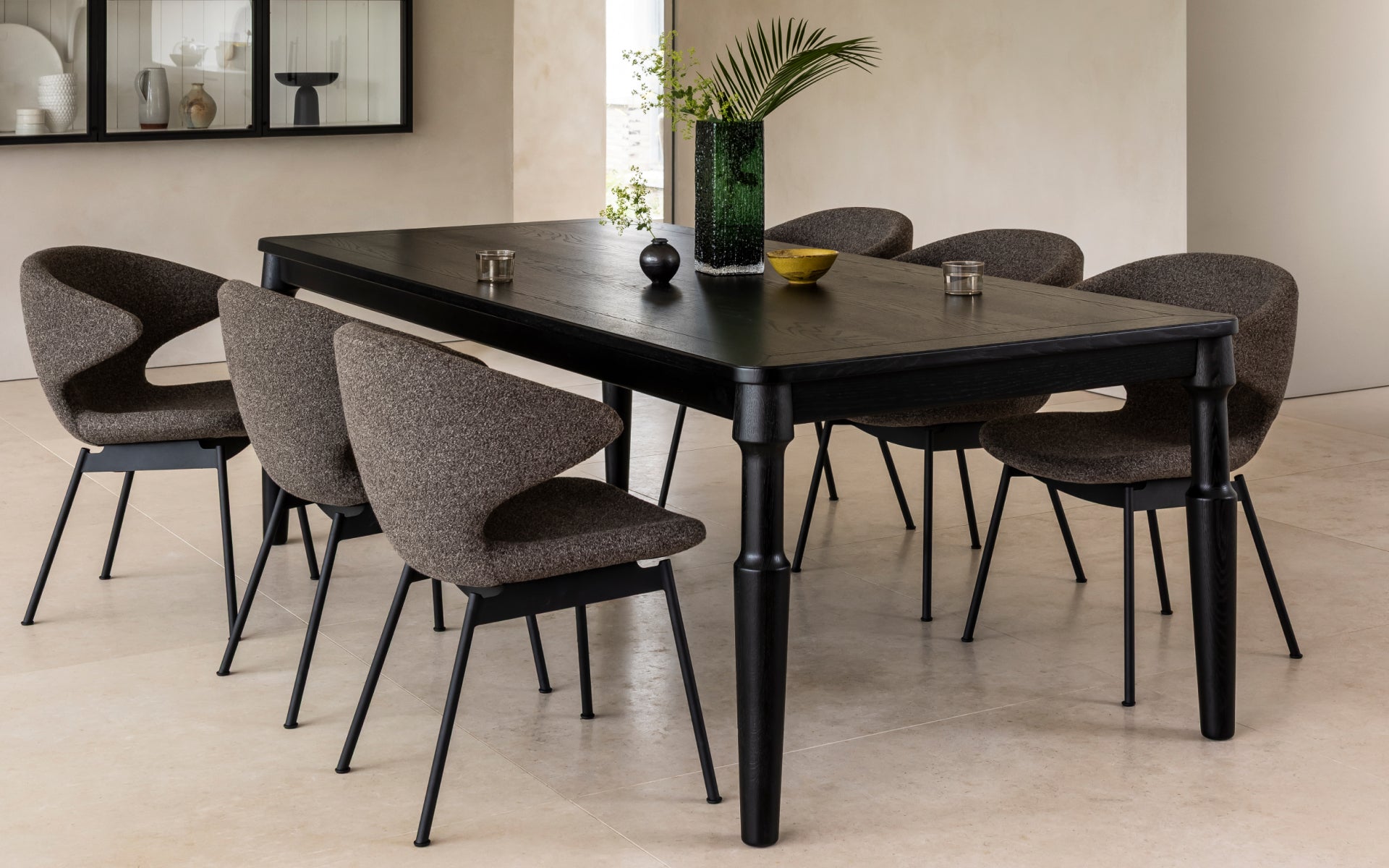
The Ziba Chair, designed for Case, was a very specific brief: a two-part ply chair. I was keen for it to have an organic elegance.