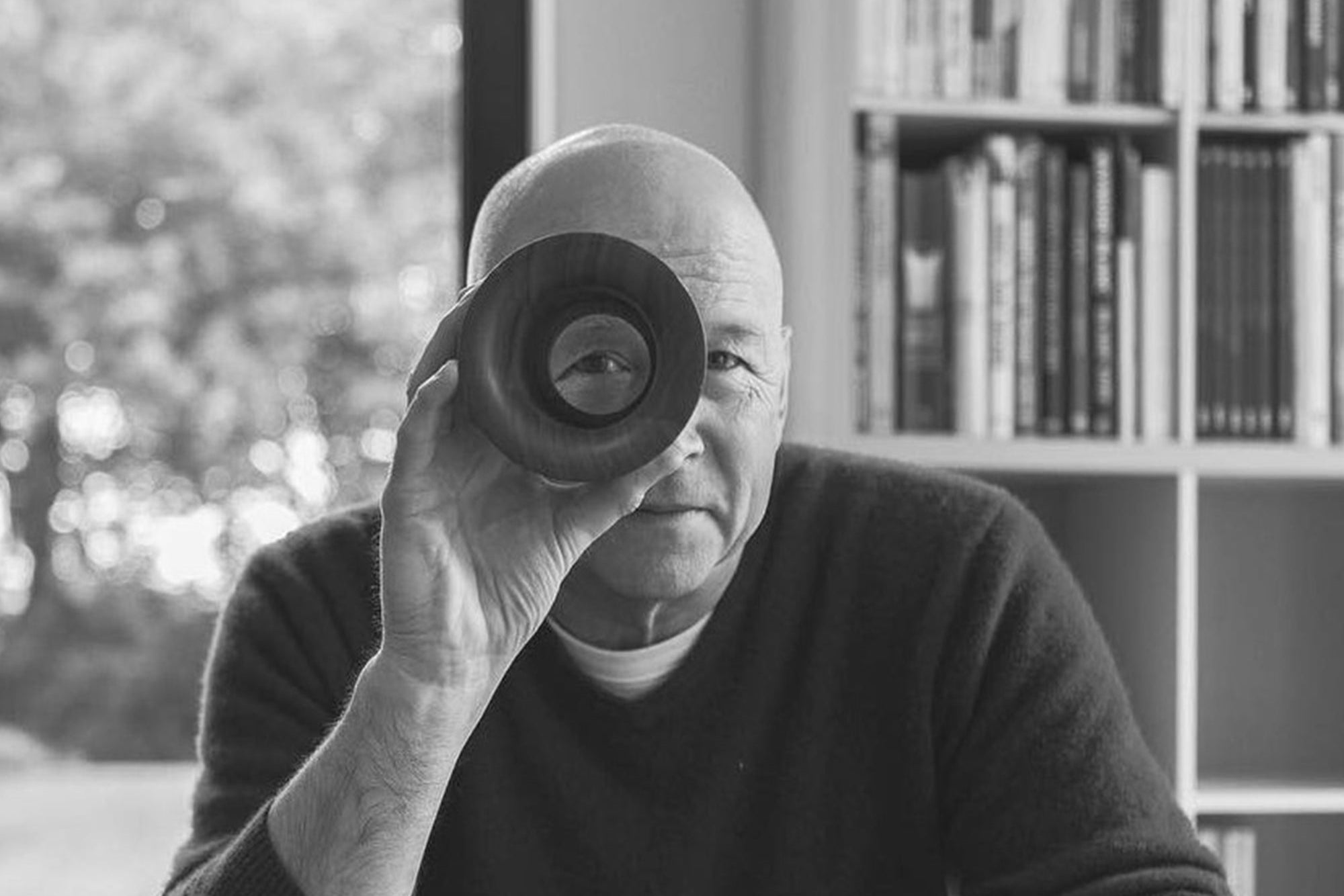
Known for his modern, understated and elegant aesthetic, British design engineer-turned-industrial designer Terence Woodgate specialises in creating quietly spectacular furniture and lighting. From cantilevered tables to upholstered seating and sculptural lights, these are designs that don’t need to shout the loudest to get noticed, while Terence himself has bagged an armful of awards.
Based out of his studio in Mayfield, Sussex, the thoughtful designer combines artful craftsmanship with technological innovation to produce pieces that combine form and function seamlessly. Here, Case sits down with the designer to discover where he gets his inspiration, plus so much more.
What inspired you to become a designer?
I’ve always been inquisitive, making things and taking things apart, then sometimes not getting them back together! I studied engineering and served a five-year mechanical engineering apprenticeship. That experience has been very beneficial to me in my design career as I can speak the same language as the people that manufacture my designs.
Have you always been interested in, and passionate about, design?
Yes, I have. I come from a generation of kids who played with Meccano, Airfix, Lego and Plasticine. Generally, designers are always working, even when they’re asleep on the sofa! I can typically visualise a new design and start to build it in my head and I find that process so enjoyable.

What prompted you to pivot from design engineer to furniture designer?
It was when I first saw the Corbusier Grand Confort armchair in an exhibition in Amsterdam. For me, it was revolutionary to see its polished steel tube frame exposed and celebrated in order to hold the soft leather cushions.
I wanted to create work like that and experience the joy of being able to freely create something on my own.
Where do you get your inspiration?
Art is a big influence. But I’m also interested in all the boring stuff like fixings that facilitate the creation of something special. Shapes, forms and juxtapositions can come to me at any time, it’s simply about being open and inquisitive. Always looking hard.
How would you describe your signature aesthetic?
Honed down to the pure form. I’m more interested in subtraction than addition. I can still admire work that’s decorative, but it doesn’t excite me as much as modernism and minimalism.
Is manufacturing technology as important as artistic craftsmanship?
Yes, absolutely. The carbon fibre furniture I designed together with John Barnard is the perfect mix of technology and craftmanship. The carbon fibre plies are all laid up by very skilled workers with such care before the part goes into an F1 autoclave with state-of-the-art technology. The process is pure symbiosis.
Can you talk us through some of your favourite pieces you’ve designed?
Some designs come easily. You’ve got an idea, and it all flows within a short period without too many prototypes, and it’s complete. Other times, it can be a painful coercing of the form into an object.
The Sussex Cabinets that I designed for Punt Mobles in Valencia, Spain, came about on the school run. I passed a black-weatherboard Sussex barn that was beautiful, but the large barn door was rusted metal. Back in the studio, Sussex was created with the drawers and the doors in a uniform, weatherboard-like façade.
Anything exciting on the horizon you can tell us about?
Slot Shelving for Case is really exciting for me. The design came about from a simple idea of turning the slots upright by 180-degrees so they’re not seen (I don’t like to see the fixings and certainly not all those holes and slots).
The result is something I think is really special – very pure, clean and uncluttered. The design exploits the accuracy of the latest laser-cutting technology. It’s a design made for longevity, but at the end of a long life, can be easily recycled as the entire system is made from steel.
 Can you tell us about your design process, from inspiration to production?
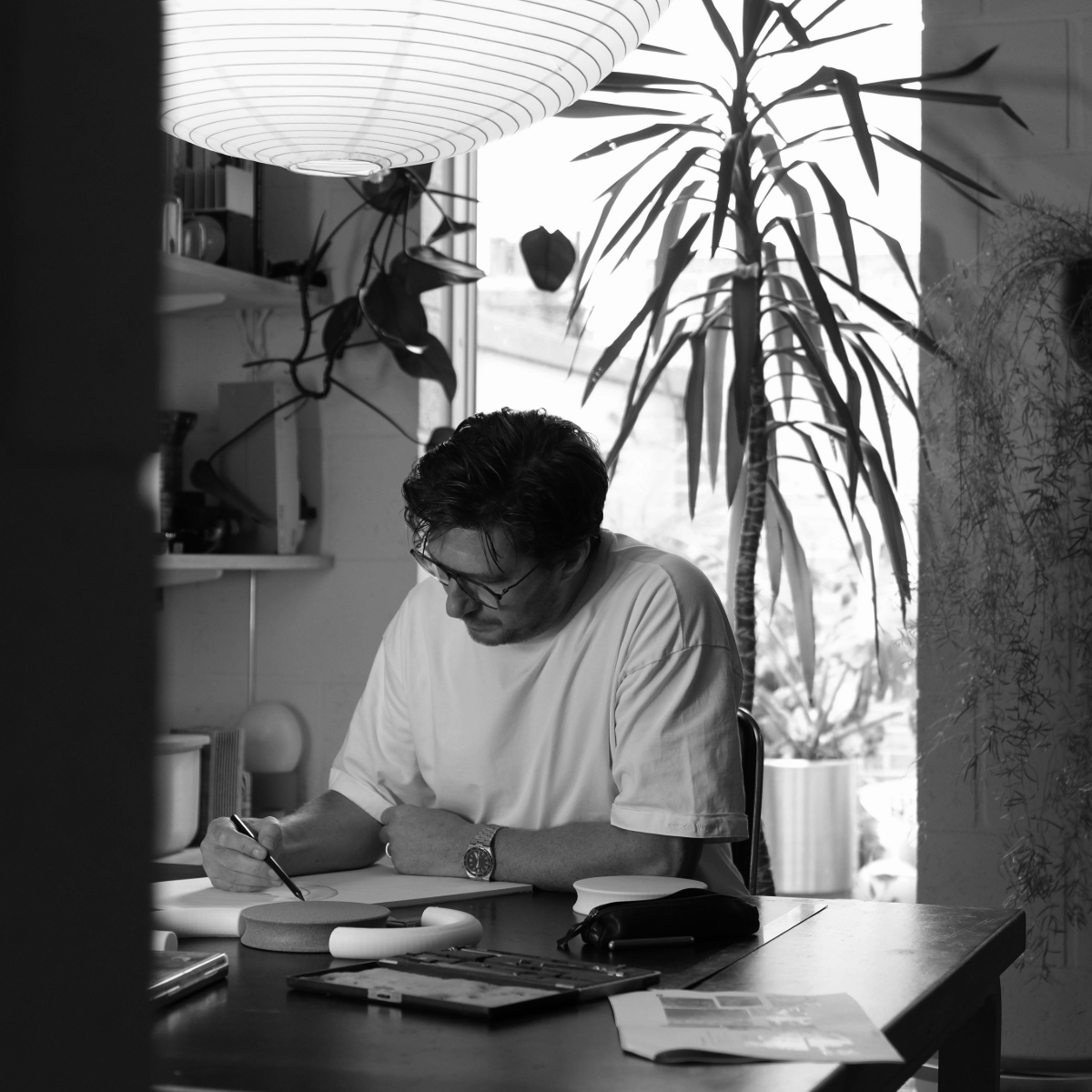
It starts off as a very relaxing and enjoyable moment. A bit like a child with crayons and a blank sheet of paper. You have the outline of an idea and you start to have a conversation with yourself by sketching out concepts. You don’t quite know where it’s going to go, but you’re on your way!
Some essential character of the piece starts to form, and the excitement grows, then the work really begins where you must consider ergonomics and other constraints. This is when it becomes real work as you need to study and understand how the design will be realised. Sometimes, you must walk away and come back to the work with a different mindset, again and again.
One needs to consider how the design is going to be made and in a practical, economical way. The quicker you can move from 2D to 3D, the better to understand the challenge. Models in card, clay and hard foam are a good way to start. I never let anything leave the studio until I’m happy and fully satisfied with the result.
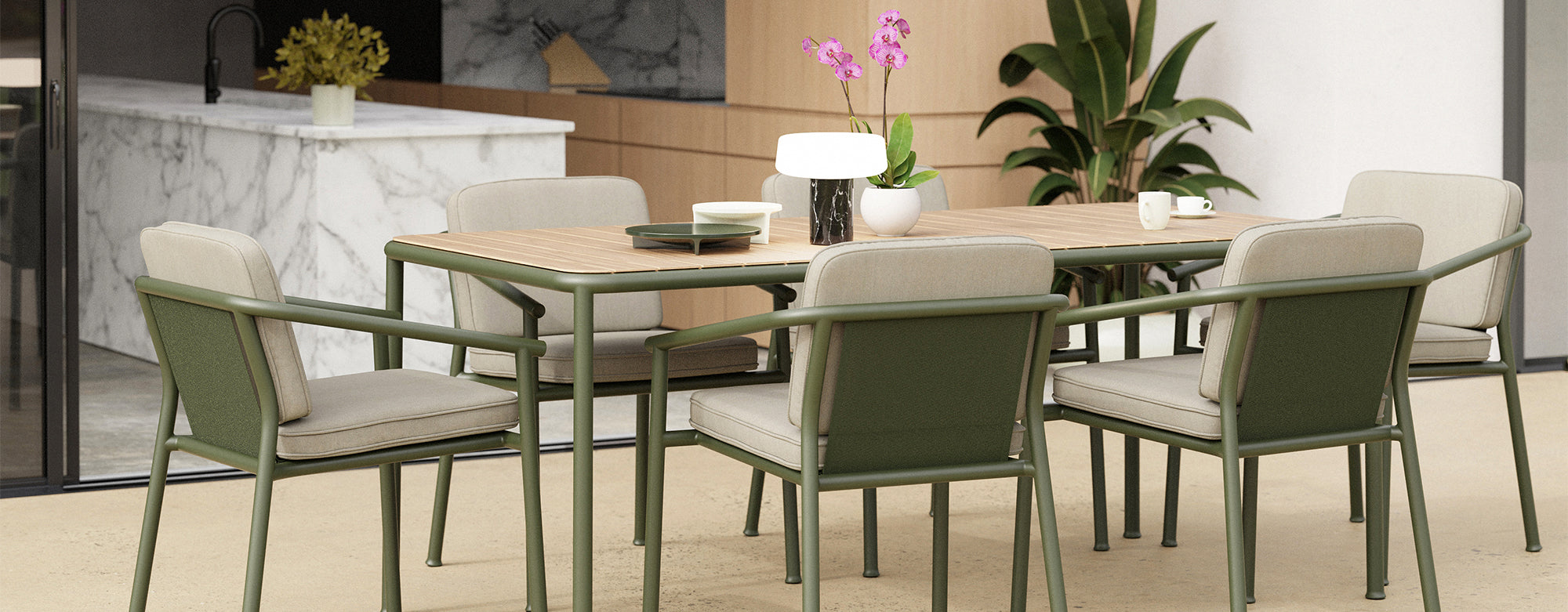
From Slot Shelving to Overhang Round Table and Core Pendant, browse and buy iconic designs by Terence Woodgate.